Regions of Quebec
Our guides, region by region, enriched visit after visit
 Capitale-Nationale
Charlevoix (Winter)
 Chaudière-Appalaches
Beauce (summer)
In the heart of the Chaudière-Appalaches region, the MRC de la Beauce forms a lively whole where heritage, nature and entrepreneurial spirit meet. The region stands out for its varied landscapes — fertile farmland, wooded plateaus and summits — as well as for a rich and welcoming community life.
The Beauce is known for its agroforestry heritage, its well-preserved historic buildings and its cultural initiatives, which all contribute to the vitality of the area. Whether through its heritage attractions, its events or its natural surroundings, the MRC offers a warm and authentic place to live, true to the reputation of the Beaucerons.
 Chaudière-Appalaches
Montmagny (spring)
Fronting the St. Lawrence River downstream from Quebec City, the MRC de Montmagny is one of the ten MRCs of Chaudière-Appalaches. Its territory reads from north to south: first the islands and the shoreline, then the farming plain, and finally the Appalachian backcountry, wilder and more wooded, where municipalities such as Sainte-Apolline-de-Patton are tucked away.
Montmagny, its main town, proudly carries the title of Snow Goose Capital: in spring and fall, thousands of geese stop over on its tidal flats, and the Route des Plumes multiplies the observation sites. With more than 360 years of history behind it, the town showcases its heritage through its interpretation centres and its heritage circuits, and Vieux-Montmagny charms with its shops and its European-looking terraces.
The MRC also comes alive to the rhythm of the Carrefour mondial de l'accordéon, an internationally renowned event. And from the Montmagny ferry terminal, a seasonal ferry serves the Isle-aux-Grues archipelago, while cruises leaving from Berthier-sur-Mer lead to Grosse-Île, a place of memory of Irish immigration.
Between river, islands and untamed nature, Montmagny is an MRC of contrasts — and its backcountry holds a few fine surprises, such as the one that follows.
 Mauricie
Trois-Rivières (Fall)
Founded in 1634, Trois-Rivières is one of the oldest cities in Quebec, tucked in halfway between Montreal and Quebec City, where the Saint-Maurice River meets the majestic St. Lawrence. A port city in full transformation, it has reinvented itself as a festive, stylish urban centre, proud of its rich past. Between its soulful historic quarter, its fascinating museums, its lively festivals and its unbeatable view over the river, Trois-Rivières is a destination that surprises and wins you over at every turn. For our first outing, though, we chose a nature activity: guided mushroom foraging.
 Chaudière-Appalaches
Beauce-3 (Winter)
In the heart of the Chaudière-Appalaches region, the Beauce regional county forms a dynamic whole where heritage, nature and entrepreneurial spirit meet. The area stands out for its varied landscapes — fertile farmland, wooded plateaus and summits — as well as for a rich and welcoming community life.
The Beauce is known for its agro-forestry heritage, its well-preserved historic buildings and its cultural initiatives, which contribute to the vitality of the place. Whether it's the heritage attractions, the events or the natural setting, the regional county offers a warm, authentic quality of life, true to the reputation of the Beaucerons.
 Capitale-Nationale
Quebec City (Summer)
Quebec City is the capital of the province of the same name and one of the oldest cities in North America, founded in 1608 by Samuel de Champlain. Thanks to its centuries of history, its remarkable architecture and its exceptional natural settings, it remains an emblematic place in Canadian heritage. Its surroundings are full of natural spots where the hiking is exceptional.
 Bas-Saint-Laurent
Kamouraska: several outings (4 seasons)
 Capitale-Nationale
Portneuf (Winter)
The Portneuf regional county sits northwest of Quebec City, where the St. Lawrence River quietly gives way to the first rises of the Canadian Shield. This territory of contrasts pairs the farmland of the St. Lawrence lowlands with the forests and lakes of the Laurentian plateau.
Crossed by the Portneuf River and the majestic Jacques-Cartier, the region draws outdoor enthusiasts and food lovers alike. Its villages carry remarkable heritage character — Deschambault-Grondines, Cap-Santé, Neuville — where stone houses and old churches stand proudly facing the river.
Portneuf is also a generous pantry: fine cheeses, artisanal charcuterie, microbrewery beers and local products abound. The Route des Saveurs de Portneuf makes that plain. Between magnificent nature and local treats, this regional county deserves your time, well off the beaten track.
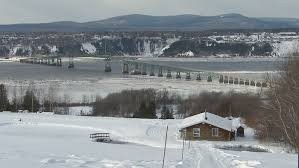 Capitale-Nationale
Île d'Orléans (winter)
A few kilometres from Quebec City, Île d'Orléans is a genuine historic jewel of the St. Lawrence, often described as the cradle of French America. Discovered by Jacques Cartier in 1535 and settled soon after, it ranks among the oldest inhabited places in New France, hence its rich architectural and cultural heritage.
With its six picturesque villages, its old houses and its rolling landscapes, the island offers a singular rural setting where 95% of the territory is still farmland, producing strawberries, apples, vegetables, ciders and other artisanal specialties that have made its culinary reputation.
Thirty-four kilometres long and reached by the island bridge, it is easily explored by following the Chemin Royal, which hugs its shores and reveals superb views over the river. Designated a heritage site of Quebec, the island charms as much through its history as through its peaceful way of life.
 Chaudière-Appalaches
Etchemins (winter)
Located 80 km southeast of Lévis, in the Chaudière-Appalaches administrative region, the MRC des Etchemins is made up of 13 municipalities and sits along the United States border. It is a territory nestled in the heart of the Appalachians, known for its farm and forest landscapes on a human scale, its breathtaking panoramas, and its rivers and lakes of remarkable water quality. Lac-Etchemin is its administrative heart. It is a quiet corner of the country where nature, local cooking and authenticity sit side by side — perfect for travellers looking to get off the beaten track.
 Chaudière-Appalaches
Beauce- 2 (winter)
Set in the heart of the Chaudière-Appalaches region, the Beauce regional county makes up a dynamic whole where heritage, nature and entrepreneurial spirit meet. The region stands out for its varied landscapes — fertile farmland, wooded plateaus and summits — as well as for a rich and welcoming community life.
The Beauce is known for its agroforestry heritage, its well-preserved historic buildings and its cultural initiatives, which all contribute to the vitality of the area. Whether it's the heritage attractions, the events or the natural setting, the county offers a warm and authentic place to be, true to the reputation of the Beaucerons.
 Capitale-Nationale
Côte-de-Beaupré (Fall)
The Côte‑de‑Beaupré is one of the oldest settled territories in North America. As early as 1626, Samuel de Champlain established a farm there to supply the town of Quebec. The territory was shaped by the Seigneurie de Beaupré, a major agricultural and religious engine of the 17th century. There are several attractions to explore in this small MRC, in the Capitale‑Nationale region, on the north shore of the St.‑Lawrence River, between Quebec City and Charlevoix.