Regions of Quebec
Our guides, region by region, enriched visit after visit
 Capitale-Nationale
Charlevoix (Summer)
The Charlevoix region, set between the St.‑Lawrence River and the mountains of the Canadian Shield, is known for its spectacular landscapes, its picturesque villages and its rich cultural heritage. You'll find grand nature there, a renowned local cuisine and an authentic way of life. Charlevoix is an ideal destination for anyone who loves the outdoors, relaxation and discovery.
 Capitale-Nationale
Théâtre Petit Champlain
At 68, rue du Petit Champlain, right in the heart of the oldest commercial district in North America, stands one of the most endearing cultural venues in Quebec City: the Théâtre Petit Champlain. True to its mission of showcasing French-language song, comedy, music and theatre, this hall offers a program as broad as it is varied — close to 70 musical shows a season, on top of theatre, dance and children's shows. It's really the magic of the room that makes every evening unforgettable. With its layout of 140 seats in cabaret mode or 230 places standing, and its mezzanine offering rows of 90 seats on a raked floor, the hall is perfectly designed to create a rare closeness with the performers. As one critic put it so well: "we already had that sense of an almost intrusive closeness with what was about to unfold." You feel every breath, every nuance, every glance from the performers — it's a relationship to live art that gets lost in the big halls. The atmosphere is warm, almost like family: in the welcoming intimacy of the Théâtre Petit Champlain, you take in shows that are at once simple, alive and deeply human. A bare stage, an attentive audience, energy racing back and forth between the artists and the crowd — it's a genuine communion, of the kind you only find in the finest small European halls.
 Chaudière-Appalaches
Petro-Canada Convenience Store (Saint-Apollinaire)
Dear readers, this section is a very particular tribute to our dear Zakary, who will never forget our memorable stop at the Petro-Canada in Saint-Apollinaire on our last drive to Montreal. How to describe the atmosphere? Picture the set of a Quebec horror movie, but on a budget.
At first glance, everything seems normal. A classic service station just off Highway 20. Pumps. A sign. Nothing to be suspicious about. But the moment you push open the door of the convenience store… time itself changes. As if you'd just walked into an episode of Stranger Thinks, Chaudière-Appalaches edition.
The fluorescent lights flicker (or is that in our heads?). An indefinable smell — somewhere between coffee burnt since 1997, fryer oil that has never been changed and a mystery best left unsolved — gives us a warm welcome.
The aisles seemed organized according to a logic known only to initiates: chips, auto parts, baby blankets, fishing line, and air fresheners next to the beef jerky. A coherent whole, in its incoherence. The sink in the washroom? A spiritual experience. The mirror? Cracked just enough to make the reflection slightly unstable. Our faces were never quite the same after that visit.
And what about the silent customer at the back, motionless, one hand resting on a bag of chips since we walked in? Still there when we walked out. Maybe he's part of the official furnishings? A mystery only Saint-Apollinaire knows.
If one day you plan yourself a « quick little stop » at this address, know what's waiting for you. Maybe pack a headlamp, in case the lights decide to give up for good.
And yet, in spite of it all… we're still laughing about it. Because it's stops like these that turn a road trip into a legend. Thank you Zakary, thank you Saint-Apollinaire, thank you Petro-Can — you gave us a story for life.
 Chaudière-Appalaches
Bellechasse (Summer)
Tucked away in Saint-Michel-de-Bellechasse, deep in the countryside of the Bellechasse regional county, the Théâtre Beaumont-Saint-Michel is a genuine cultural institution in Quebec. Opened in 1975, it seats 498 people a night and sees more than 20,000 people come through its legendary theatre each year. In short, it's the essential date for summer theatre lovers in the region! The experience goes well beyond the performance itself. What has become the house trademark is its famous dinner-and-show formula. Guests get to enjoy a country setting, have an apéro in the gardens and take part in the dinner-theatre formula with a buffet prepared by Cosmos Traiteur, in a friendly summer atmosphere. Picture it: a summer evening, an apéritif in the shade of the trees, a good generous meal, then a spirited comedy to round it all off. A complete outing, perfectly orchestrated! The theatre built its reputation on the quality of its productions. Founded in 1975, the Théâtre Beaumont-Saint-Michel has earned a solid name thanks to the quality of its shows and its warm welcome. The organization also contributes actively to the cultural and tourism profile of the Bellechasse region. Year after year it presents well-crafted comedies, carried by talented performers and careful staging. Whether it's an outing as a couple, with friends, or to mark a special occasion (a celebration, a birthday, a reunion), the Théâtre Beaumont-Saint-Michel offers a memorable experience that brings together good food, culture and good company. A fine way to keep Quebec-style summer theatre alive, in a warm and authentic setting.
 Montréal
Cirque du Soleil
You can't talk about Quebec's great cultural points of pride without naming Cirque du Soleil. Founded in Montreal, this world-renowned company redefined the art of the circus by weaving together acrobatics, music, projections and theatre. Every summer the city hosts one of the flagship productions of its tour under the Big Top in the Old Port — and it's a date we don't miss! And what about the performers? Coming from every corner of the world, they dazzle us, naturally, with their mastery and the technical command of their art. Carried by a spellbinding original score, spectacular lighting and choreography of insane precision, they push the limits of what the human body can do. There are moments where you flat out hold your breath!
 Chaudière-Appalaches
Les Appalaches (summer)
You cannot talk about the MRC des Appalaches without bringing up its past of chrysotile asbestos mining, which made Thetford Mines the "world capital" of that industry for more than a century. Today that past is superbly showcased thanks to the Musée Minéralogique et Minier de Thetford Mines and the Centre historique de la mine King, two essential attractions for understanding the region's history and how it has changed. The Belvédère de la Mine BC, reached by a staircase of some fifty steps, offers a striking view over the old mining pits — a lunar landscape unique in Quebec. The MRC has superbly reinvented itself as a four-season outdoor destination. You find Mont Adstock for downhill skiing, Les 3 Monts in Saint-Joseph-de-Coleraine for hiking, the Parc national de Frontenac and Grand lac Saint-François, and not least Le Grand Morne in Sainte-Clotilde, where people hang-glide and climb. You can even go scuba diving at a site with a worldwide reputation! That is right — the old flooded mines have become one of the most sought-after dive sites in North America, with spectacular visibility. The region also stands out for its extraordinary built heritage. More than 2,000 old houses and other properties, dating from before 1950, have been inventoried across the territory — a genuine open-air museum! You discover some forty significant places spread across the 19 municipalities, bearing witness to a rich rural, religious and industrial tradition. Every village has its own small charm: Saint-Julien and its remarkable church, Sainte-Praxède with its country character, Sainte-Clotilde with its covered bridge and its Arthur-Pomerleau dam. In short, the MRC des Appalaches is that fine combination of generous nature, fascinating history, outdoor recreation and heritage. It is also a lively cultural scene with its festivals, its concerts and its Théâtre Les Bâtisseurs de montagnes, not to mention a cuisine that showcases local products. A destination to put on your list without fail if you are looking to explore another face of Quebec — off the beaten track, but full of riches!
 Chaudière-Appalaches
Etchemins (summer)
Located 80 km southeast of Lévis, in the Chaudière-Appalaches administrative region, the MRC des Etchemins is made up of 13 municipalities and sits along the United States border. It is a territory nestled in the heart of the Appalachians, known for its farm and forest landscapes on a human scale, its breathtaking panoramas, and its rivers and lakes of remarkable water quality. Lac-Etchemin is its administrative heart. It is a quiet corner of the country where nature, local cooking and authenticity sit side by side — perfect for travellers looking to get off the beaten track.
 Capitale-Nationale
Charlevoix (Spring)
The Charlevoix region, set between the St. Lawrence River and the mountains of the Canadian Shield, is known for its dramatic landscapes, its picturesque villages and its rich cultural heritage. You'll find grand scenery, a celebrated local food scene and an authentic way of life. Charlevoix is an ideal destination for anyone who loves the outdoors, unwinding, and discovering new things.
 Capitale-Nationale
Quebec City (Spring)
Quebec City is the capital of the province of the same name and one of the oldest cities in North America, founded in 1608 by Samuel de Champlain. Thanks to its centuries of history, its remarkable architecture and its exceptional natural setting, it remains an emblematic place in Canadian heritage. Its surroundings are full of natural spots where the hiking is exceptional.
 Mauricie
Shawinigan (Spring)
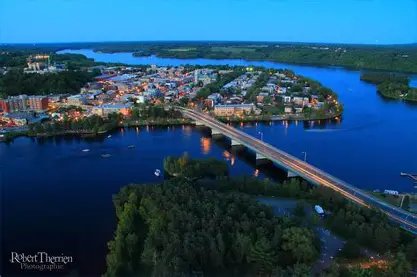
Set in the heart of the Mauricie, on the banks of the majestic Saint-Maurice River, Shawinigan is a city that brilliantly weaves together an industrial past, spectacular nature and a good way of living. About 155 kilometres from both Montreal and Quebec City, it sits strategically halfway between the two, which makes it an ideal base for exploring the region. Its name means "portage on the ridge" — a nod to the Indigenous roots of the area. Shawinigan is above all a city born of water and human daring. Founded in 1901, it came into being through the construction of hydroelectric stations and the industrialization that followed. The first Canadian city to produce aluminum, it was also one of the first Quebec cities to have an urban plan. Its history is tightly bound to hydroelectricity, pulp and paper and chemicals — an industrial heritage still palpable in its architecture and its historic sites. La Cité de l'énergie, the city's marquee attraction, tells that fascinating saga superbly. Today Shawinigan has reinvented itself admirably as an outdoor destination. La Mauricie National Park spreads out 536 km² of forest, mountains and some 150 lakes: hiking, canoeing, cycling, cross-country skiing or snowshoeing make it an extraordinary playground all year long. The parc de l'Île-Melville, a vast 160-hectare wooded space right in the middle of the city, is a favourite for hiking and mountain-biking trails. In summer you can rent kayaks, canoes or paddleboards there to get out on the Saint-Maurice River. "Shawi", as locals affectionately call it, also has a lively downtown. Avenue Willow, known for its terraces, microbreweries and restaurants, adds a spirited note to the experience. The famous Microbrasserie Le Trou du Diable, a flagship of the Quebec brewing scene, was born here — a must for craft beer lovers. The promenade du Saint-Maurice, for its part, invites fine walks along the river, with the emblematic silhouette of the Cité de l'énergie tower as a backdrop.
 Capitale-Nationale
Portneuf (spring)
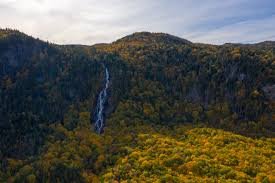
The MRC de Portneuf stretches northwest of Quebec City, where the St. Lawrence River quietly gives way to the first ridges of the Canadian Shield. This territory of contrasts marries the farming lowlands of the St. Lawrence valley to the forests and lakes of the Laurentian plateau.
Crossed by the Portneuf River and the majestic Jacques-Cartier, the region draws outdoor lovers and epicureans alike. You find villages of remarkable heritage character there — Deschambault-Grondines, Cap-Santé, Neuville — where stone houses and old churches stand proudly facing the river.
Portneuf is also a generous pantry: fine cheeses, artisanal charcuterie, microbrewery beers and local products abound. The Route des Saveurs de Portneuf makes the case well. Between grand nature and local treats, this MRC deserves your time, far from the too-well-beaten track.
 Capitale-Nationale
Quebec City (rainy day)
Quebec City is the capital of the province of the same name and one of the oldest cities in North America, founded in 1608 by Samuel de Champlain. Thanks to its centuries of history, its remarkable architecture and its exceptional natural landscapes, it remains an emblematic place of Canadian heritage. Its surroundings are full of natural spots where the hiking is exceptional.