Our Travels
Follow our adventures around the world
New Brunswick
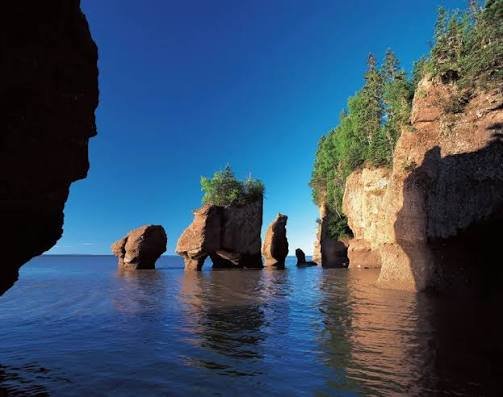
Canada's only officially bilingual province, New Brunswick is the great crossroads of the Maritimes — the one you drive through too fast and would do well to take the time to discover. Wedged between Quebec, Nova Scotia and the Gulf of St. Lawrence, it unrolls more than 2,200 km of coastline, forests as far as the eye can see and one of the most vibrant Acadian identities in America. This is where the heart of Acadia beats. About a third of the population is French-speaking, and the Acadian coast — from Shediac to Caraquet — lives to the rhythm of French, of fishing and of a pride that bursts out every August 15 to the sound of the Tintamarre. Star-marked flags in the windows, pots and pans in the streets: a culture that survived the Deportation and makes no secret of it. On the nature side, the province plays two hands. To the west, the Bay of Fundy and the highest tides in the world. To the east, the Northumberland Strait and the warmest salt water north of Virginia — a contrast that never stops surprising. Between the two: the Bouctouche dune, Kouchibouguac National Park, the salmon rivers and forests that catch fire in the fall. And then there's the table: Shediac lobster, Caraquet oysters, clams, fricot, poutine râpée and ployes from the Madawaska. New Brunswick is the Maritime province people underestimate — until they really stop there.
Nova Scotia
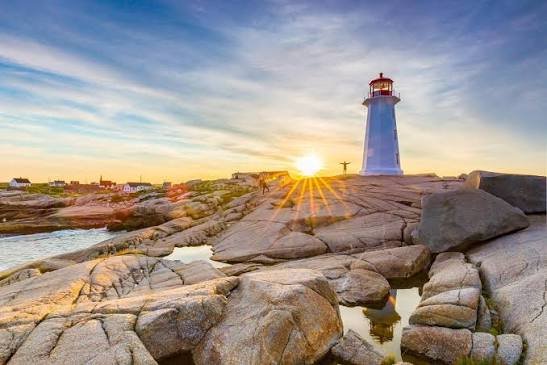
Tucked along Canada's Atlantic coast, Nova Scotia (Nova Scotia — "New Scotland" in Latin) is one of the country's three Maritime provinces. Almost entirely surrounded by the sea, this peninsula wins you over with its dramatic coastal scenery, its iconic lighthouses, its colourful fishing villages and the warm Maritime welcome. The province takes its name from Scottish roots that are still very much alive in the Celtic music and the bagpipes. But its soul is also deeply Acadian, Mi'kmaq, African Nova Scotian and Anglo-Loyalist — a rich blend you feel everywhere: in the music, the food and the pace of life. Halifax, the capital, pairs military history with a laid-back urban feel and a lively cultural scene centred on its famous Waterfront Boardwalk. With 7,400 km of shoreline — longer than the entire east coast of the United States! — Nova Scotia offers an exceptional range of landscapes: the legendary Cabot Trail on Cape Breton, the picture-perfect Peggy's Cove lighthouse, the port town of Lunenburg (a UNESCO site), and the Bay of Fundy with the highest tides in the world (up to 16 metres!). A real playground for anyone who loves the outdoors. On the food side, it's paradise: fresh lobster in a lobster roll, Digby scallops, oysters, mussels, not to mention the famous Acadian poutine râpée, Halifax's celebrated donair and the excellent wines of the Annapolis Valley. All of it washed down with Celtic music — Cape Breton is recognized worldwide as a stronghold of the fiddle and of kitchen parties. Nova Scotia is the sea, the music and the Maritime soul in all their glory — an essential stop on any Atlantic Canada road trip!
Newfoundland
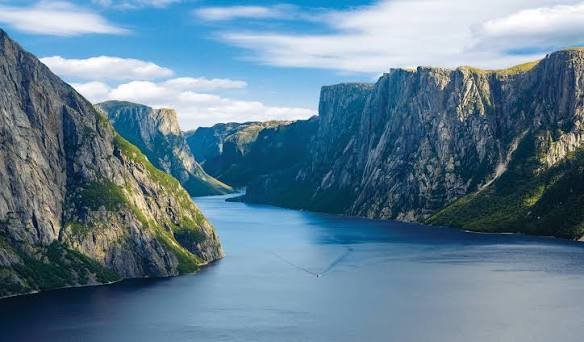
The easternmost land in North America, Newfoundland is the legendary island that, together with mainland Labrador, makes up Canada's most eastern province. A former British colony, it only joined Canada in 1949 and even has its own time zone, offset by 30 minutes! Everything is different here: the landscapes bring Scandinavia to mind more than the rest of Canada. Between dizzying cliffs, majestic fjords, endless boreal forest and colourful fishing villages, Newfoundland is a genuine playground for anyone who loves nature. Two of its sites are UNESCO World Heritage: Gros Morne National Park, with its spectacular scenery, and L'Anse aux Meadows, the only authenticated Viking settlement in North America. The island is also a paradise for wildlife: humpback whales, Atlantic puffins, northern gannets and of course the famous icebergs from Greenland that parade by each spring along the legendary Iceberg Alley. But Newfoundland is above all the legendary welcome of its people! Newfies are known for their warmth, their humour and their very much alive Celtic traditions — folk music, kitchen parties and the famous screech-in. Not to mention a tasty local cuisine (cod fish and chips, toutons, jiggs dinner) and an enchanting capital, St. John's, with its lanes lined with multicoloured houses. Newfoundland is Canada's best kept secret: an authentic, disorienting, magnificent destination, absolutely worth discovering!
Côte-Nord (Manicouagan) and Labrador
Manicouagan and Labrador — the Far North in all its splendour
The Manicouagan region
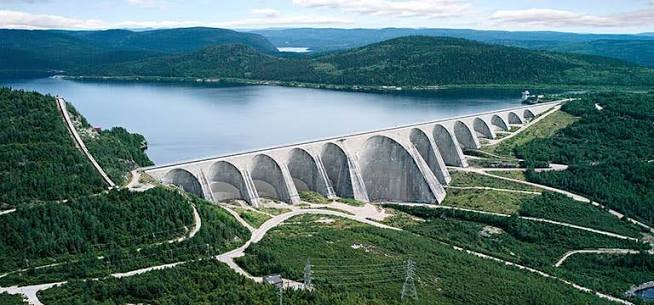
Tucked along the north shore of the St. Lawrence River, the Manicouagan region is one of the gateways to Quebec's Far North. Its name comes from the Manicouagan River that runs through it, and above all from its famous meteorite crater, a ring of water formed more than 200 million years ago by a meteorite impact — so vast you can see it from space! This "Manicouagan Reservoir," nicknamed "the Eye of Quebec," is today one of the country's most emblematic bodies of water. The region, whose main town is Baie-Comeau, is deeply marked by its industrial past and present: aluminum, pulp and paper, and above all hydroelectricity. This is where the majestic dams of the Manic-Outardes complex stand — including the famous Daniel-Johnson dam (Manic-5), the largest multiple-arch and buttress dam in the world. A genuine engineering feat that speaks to Quebec know-how. But Manicouagan is also nature on an outsized scale: boreal forest as far as the eye can see, rushing rivers, the spectacular Monts Groulx, abundant wildlife (moose, bears, caribou, migratory birds). Outdoor lovers find what they are looking for here summer and winter alike — hiking, canoeing, fishing, hunting, snowmobiling, backcountry skiing... Not to mention magnificent parks such as the Parc Nature de Pointe-aux-Outardes, a birding paradise recognized worldwide.Culturally, the region also stands out for the presence of the Innu people, notably at Pessamit, whose ancestral territory (Nitassinan) covers a large part of Manicouagan. A rich, living and generous culture, discovered through encounters, events and interpretation sites.
Labrador
To continue north on the legendary Route 389 is to head into an even wilder and grander territory: Labrador. This immense peninsula, part of the province of Newfoundland and Labrador, shares its western border with Quebec, just past Fermont. It is here, only a few kilometres from the provincial line, that you find Labrador City and Wabush — two lively mining towns which, together with Fermont, make up what is called "Labrador West." The region lives to the rhythm of iron ore mining, one of the largest such operations in the world. You discover a singular culture there, shaped by a pioneering spirit, wide open spaces and a genuinely warm welcome — the kind only northerners give. Labrador is also a spectacular territory for adventure lovers: endless lakes, rivers full of fish, dazzling northern lights, wildlife (caribou, black bears, wolves, moose), and above all a near-total silence that reminds you at once how vast and untouched the planet can be. In winter, snowmobiling and snowshoeing are king; in summer, canoeing, kayaking, fly fishing and hiking rule. For long-haul explorers, the Trans-Labrador Highway (Route 500, then Route 510) even lets you cross all of Labrador as far as Blanc-Sablon, on Quebec's Lower North Shore. A journey of roughly 1,200 km of raw nature that ranks among the greatest road adventures in North America!
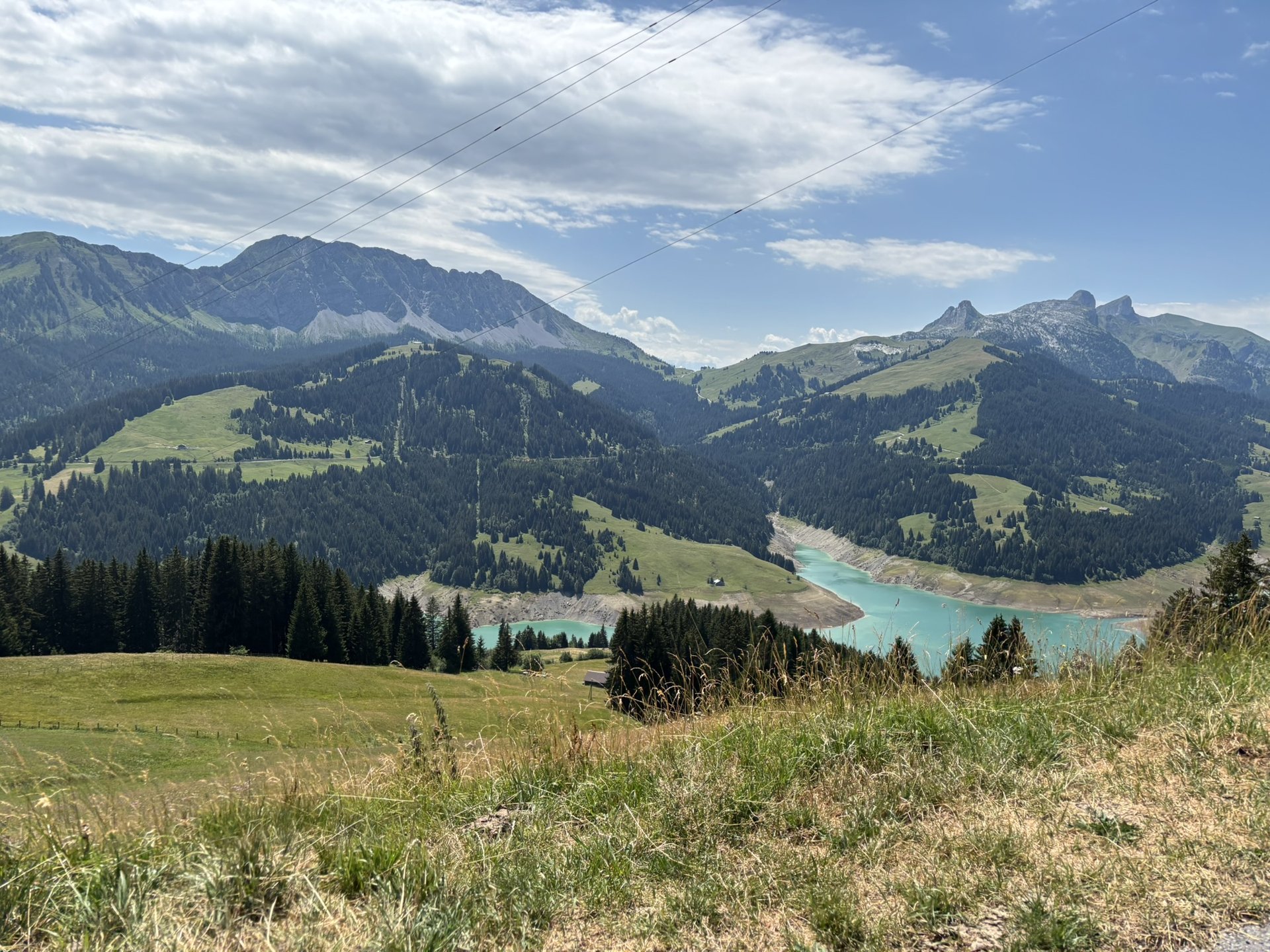
French-Speaking Switzerland and Lyon (again!!! and often!!)
French-speaking Switzerland — Between lakes, mountains and the good life
At the crossroads of France and the Alps, French-speaking Switzerland is an invitation to slow down. Geneva, Lausanne — every francophone city in the country has its own soul, but they all share that striking setting where the lakes shimmer at the foot of snow-capped peaks. You stroll the quays of Lake Geneva, you explore the UNESCO-listed terraced vineyards of Lavaux, and you let yourself be won over by a way of living that blends Swiss precision with Latin warmth. Perfect for anyone who loves nature, culture and a good fondue.
Lyon — France's secret capital
Wedged between the Rhône and the Saône, Lyon is the city that those who have discovered it can no longer keep to themselves. A UNESCO World Heritage site, it unfolds its medieval Vieux-Lyon, its mysterious traboules and the slopes of the Croix-Rousse, inhabited by a creative, bohemian energy. But what makes Lyon truly unforgettable is the table: the gastronomic capital of France (some will say of the world), it is the kingdom of the bouchons lyonnais, of quenelles and of generous markets. To come to Lyon without eating would be to miss the whole point.

Riviera Maya, Mexico
Mexico is a country of a thousand faces, where ancient civilizations sit alongside a living, colourful culture. From majestic pyramids to bustling markets, by way of a cuisine recognized the world over, Mexico casts its spell on visitors from the first moments. Between its varied landscapes — deserts, jungles, volcanoes and coastlines — and the legendary warmth of its people, this Central American country is a destination that marks the soul for a long time.
The Yucatán Peninsula is a genuine open-air history book. Cradle of the Maya civilization, it holds some of the most impressive archaeological sites on the continent, including the famous Chichen Itza. But the Yucatán is also breathtaking nature: cenotes with turquoise, crystal-clear water, nature reserves teeming with wildlife, and colonial cities like Mérida that charm you with their architecture and their way of life. A territory to explore slowly, taking the time to soak in each layer of its fascinating history.
Stretched along the Caribbean Sea, the Riviera Maya is one of the most sought-after beach destinations in the world — and with good reason. Its white sand beaches lined with palm trees, its turquoise waters over the coral reefs and its festive, laid-back atmosphere make it a paradise for every kind of traveller. Between a dive into a secret cenote, a day of rest at an all-inclusive resort or exploring the Maya ruins of Tulum perched above the sea, the Riviera Maya knows how to make you dream as well as how to take you somewhere else entirely.
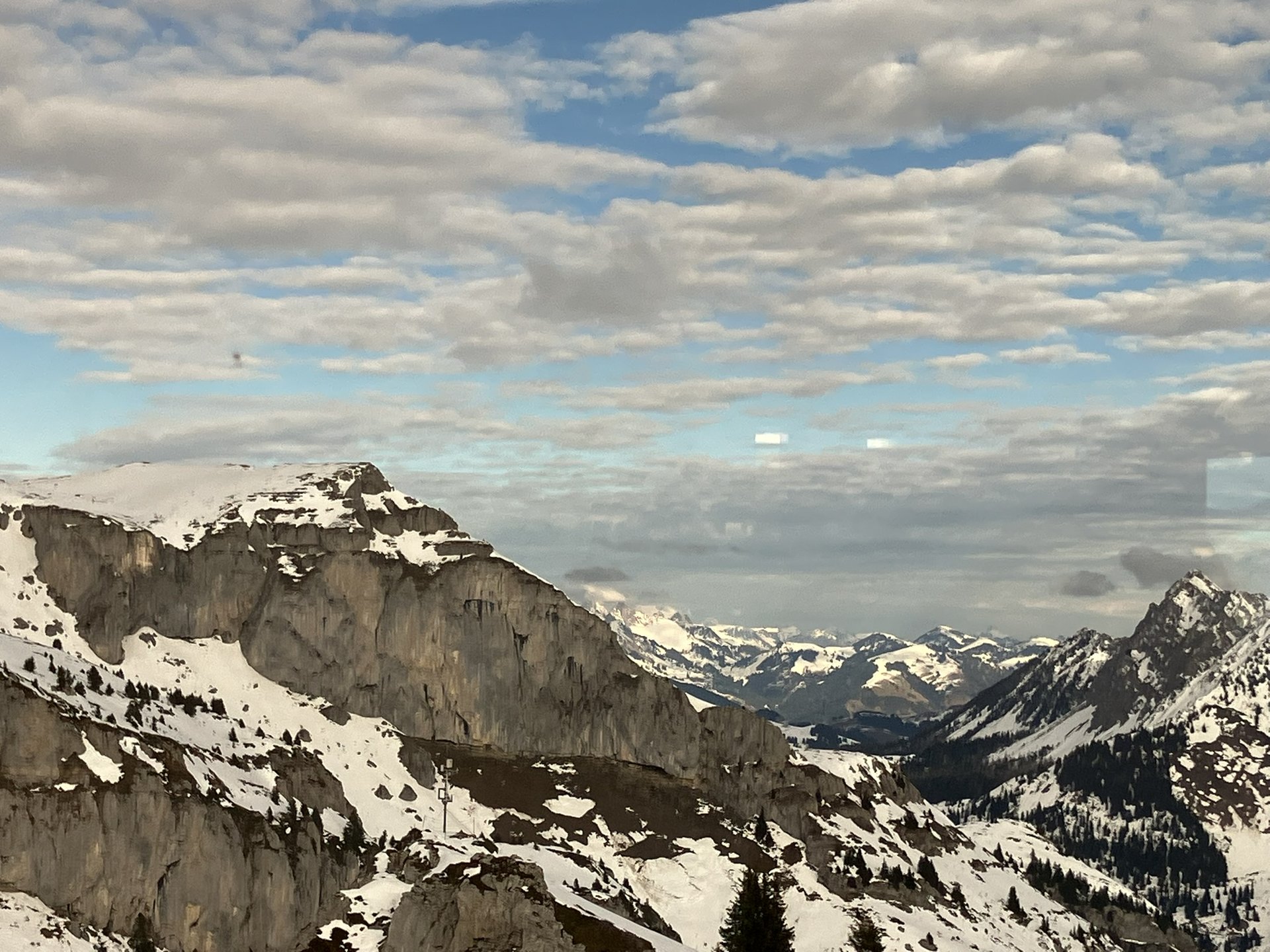
French-Speaking Switzerland / Lyon / Paris
French-speaking Switzerland — Between lakes, mountains and an easy way of life
At the crossroads of France and the Alps, French-speaking Switzerland is an invitation to slow down. Geneva, Lausanne, every French-speaking city in the country has its own soul, but they all share that striking setting where the lakes shimmer at the foot of snow-capped summits. You walk the quays of Lake Geneva, you explore the UNESCO-listed terraced vineyards of the Lavaux, and you let yourself be won over by a way of living that mixes Swiss precision with Latin warmth. Ideal for anyone who loves nature, culture and a good fondue.
Paris — The city that has never finished surprising you
Paris is a city we think we know before we've ever set foot in it. And yet it always outwits expectations. Of course there's the Eiffel Tower, the Louvre and the café terraces… but Paris is above all the lanes of the Marais in the morning, the bouquinistes along the Seine, the colourful markets of Belleville and the little-known museums that hide unsuspected treasures. Every arrondissement is a village in itself, every street corner tells a story. Paris isn't visited: it's lived.
Lyon — The secret capital of France
Wedged between the Rhône and the Saône, Lyon is the city that those who have discovered it can no longer keep to themselves. Listed as UNESCO World Heritage, it unfolds its medieval Vieux-Lyon, its mysterious traboules and the slopes of the Croix-Rousse, inhabited by a creative, bohemian energy. But what makes Lyon truly unforgettable is the table: the gastronomic capital of France (some will say of the world), it is the kingdom of the bouchons lyonnais, of quenelles and of generous markets. Coming to Lyon without eating would be missing the essential.

Punta Cana
At the eastern tip of the Dominican Republic, Punta Cana is a beach destination known worldwide for its white sand beaches lined with coconut palms and its turquoise Caribbean waters. The region stretches over some fifty kilometres of coastline, where beaches like Bávaro and Macao draw travellers in search of sun all year round — the average temperature hovers around 27 °C.
Beyond the beaches, Punta Cana offers spectacular nature: coral reefs perfect for diving, mangroves to explore by kayak, and the Indigenous Eyes ecological park with its twelve freshwater lagoons.
The place wins you over with its laid-back atmosphere, its warm Dominican culture set to the rhythm of bachata and merengue, and its local cooking, which marries Creole flavours with freshly caught seafood. Whether for an all-inclusive family stay, a honeymoon or a getaway with friends, Punta Cana remains a sure bet for escaping the Quebec winter.

Niagara Falls
Straddling the border between Canada and the United States, Niagara Falls is one of the most spectacular natural destinations in the world. On the Ontario side, the city offers the most impressive view of the famous falls, in particular the celebrated Horseshoe Falls, which stretch more than 670 metres and pour millions of litres of water per second into a deafening roar and a permanent cloud of mist.
Journey Behind the Falls gives access to tunnels cut into the rock, offering a singular perspective behind the curtain of water. For thrill seekers, the Skylon Tower and the SkyWheel offer breathtaking panoramas, particularly magical in the evening when the falls light up in a thousand colours.
Beyond the natural spectacle, the city appeals through its festive atmosphere and its slightly kitschy side. Clifton Hill, nicknamed "the street of fun," is packed with offbeat museums, rides, themed restaurants and casinos that at moments recall the buzz of a miniature Las Vegas. Wine lovers will also appreciate how close the Niagara-on-the-Lake wine region is, a charming historic village known for its vineyards, its icewines and its Shaw Festival theatre.
Only a few hours' drive from Toronto or Montreal, Niagara Falls remains a four-season destination: romantic in summer, enchanting in winter when the falls dress themselves in ice, and always grand, no matter the time of year.