Regions of Quebec
Capitale-Nationale
Our stories, tables and places to stay in Capitale-Nationale

Rioux et Pettigrew
A few steps from the Old Port, this restaurant hangs on its walls the portraits of its former owners, Rioux and Pettigrew, wholesalers who occupied the premises at the end of the 19th century. A gentle scent of the past drifts over the rustic decor: plank floors, brick and stone walls, shelves holding antique tin cans. In charge is chef and co-owner Dominic Jacques, winner of the show Les Chefs! in 2012 and named chef of the year 2021 by the SCCPQ. His seasonal market cooking marries the riches of the Quebec land with flavours from elsewhere, and he also offers a secret menu where you hand your appetite over entirely to his expert hands. The restaurant appears in the Michelin Guide Canada.

La Barberie
An institution in the Saint-Roch neighbourhood! Rooted in its community since 1997, La Barberie is the first craft-brewing co-operative in Quebec. Its mission: to produce and serve original, distinctive recipes with a concern for making beer accessible to everyone and building a sense of community. On site, 8 taps in constant rotation are available, and the beers they brew are pleasantly affordable. The tasting carousel is a must, best enjoyed on their beautiful terrace — a Quebec City classic.
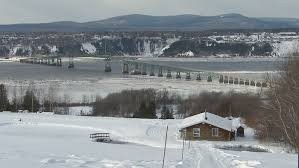
Île d'Orléans (winter)
A few kilometres from Quebec City, Île d'Orléans is a genuine historic jewel of the St. Lawrence, often described as the cradle of French America. Discovered by Jacques Cartier in 1535 and settled soon after, it ranks among the oldest inhabited places in New France, hence its rich architectural and cultural heritage.
With its six picturesque villages, its old houses and its rolling landscapes, the island offers a singular rural setting where 95% of the territory is still farmland, producing strawberries, apples, vegetables, ciders and other artisanal specialties that have made its culinary reputation.
Thirty-four kilometres long and reached by the island bridge, it is easily explored by following the Chemin Royal, which hugs its shores and reveals superb views over the river. Designated a heritage site of Quebec, the island charms as much through its history as through its peaceful way of life.

Côte-de-Beaupré (Fall)
The Côte‑de‑Beaupré is one of the oldest settled territories in North America. As early as 1626, Samuel de Champlain established a farm there to supply the town of Quebec. The territory was shaped by the Seigneurie de Beaupré, a major agricultural and religious engine of the 17th century. There are several attractions to explore in this small MRC, in the Capitale‑Nationale region, on the north shore of the St.‑Lawrence River, between Quebec City and Charlevoix.

Côte-de-Beaupré (Summer — a rainy day)
The Côte‑de‑Beaupré is one of the oldest settled territories in North America. As early as 1626, Samuel de Champlain established a farm there to supply the town of Quebec. The territory was shaped by the Seigneurie de Beaupré, a major agricultural and religious engine of the 17th century. There are several attractions to explore in this small MRC, in the Capitale‑Nationale region, on the north shore of the St.‑Lawrence River, between Quebec City and Charlevoix.

Tapas et Liège (avenue Maguire)
A food destination settled on avenue Maguire since 2017, Tapas & Liège serves a menu of tapas made for sharing and an impressive wine list, in a friendly, festive atmosphere where discovery is at the heart of everything. The menu is creative and generous, with fresh ingredients and careful presentation, and the tasting menus appeal to anyone who wants to explore the offering in depth. One small distinction: the maple syrup used in the kitchen comes from a family sugar bush, run with passion by the owners themselves. An essential address in the Sillery–Sainte-Foy sector.

Côte-de-Beaupré (summer)
The Côte-de-Beaupré is one of the oldest settled territories in North America. As early as 1626, Samuel de Champlain established a farm here to supply the town of Quebec. The territory was shaped by the Seigneurie de Beaupré, a major agricultural and religious driver of the 17th century. Several attractions are there to explore in this small MRC in the Capitale-Nationale region, on the north shore of the St. Lawrence River, between Quebec City and Charlevoix.

Quebec City (Fall)

Portneuf (Fall)
The Portneuf regional county sits northwest of Quebec City, where the St. Lawrence gives way to the first rises of the Canadian Shield. It's a territory of contrasts, pairing the farmland of the St. Lawrence lowlands with the forests and lakes of the Laurentian plateau.
Crossed by the Portneuf River and the magnificent Jacques-Cartier, the region draws outdoor enthusiasts and food lovers alike. Its villages carry remarkable heritage character — Deschambault-Grondines, Cap-Santé, Neuville — where stone houses and old churches stand proudly facing the river.
Portneuf is also a generous pantry: fine cheeses, artisanal charcuterie, microbrewery beers and local products are everywhere, and the Route des Saveurs de Portneuf makes the case. Between grand scenery and good eating, this county rewards anyone willing to linger off the well-worn trails.

La Taverne Louise / The Chef's Table
A fine-dining address in Old Quebec opened in July 2017, the fruit of four partners' creativity — Blaise Fortier, Simon Jobin, Nikolas Couture and Jean Deschênes. Housed inside the Hôtel Port-Royal right in the heart of the Old Port, it offers, at affordable prices, flavourful and generous cooking, relaxed service and one of the best selections of private-import wines, cocktails and beers in Quebec City. The decor — leather, wood, gold everywhere and accents of black — is the work of the firm LemayMichaud and won the prize for the most beautiful restaurant in Quebec at the Grands Prix du Design. In summer, a large sunny terrace rounds out the experience.
A nice coincidence hides behind the name. The restaurant is named for Louise, daughter of Queen Victoria, born in 1848 — the very year the building that houses it was built. And the address? 48, rue Saint-Paul. Forty-eight, three times over.
The house splits into two distinct moods: on the Taverne side, you sit down to a full meal; on the wine bar side, you enjoy small plates, oysters, charcuterie, house-made pasta and risottos in a more convivial setting. The dining room seats 80, a dozen of those at the bar, and the terrace adds 60 more.
As for the famous chef's table, it can be reserved for groups of 10 people or fewer, right inside the Taverne's kitchen. It's named for chef Nikolas Couture, who has passed through several of Quebec City's great houses, including Le Saint-Amour and Toast.

Mora — Pasta e Prosecco
A fine find on the Grande Allée! Opened in June 2025 in a former McDonald's that sat abandoned for about ten years, Mora quickly established itself as one of the very good addresses in Quebec City — as much for what happens on the plate as for the decor, which turns heads the moment you walk in. Delicious fresh pasta, Italian wine and bubbles served in an elegant setting. Mora means "blackberry" in Italian, echoing the burgundy and velvet tones of the room. A refined, festive Italian experience.

Gisèle Buvette
Gisèle is a neighbourhood buvette in Saint-Sauveur. Natural wine, small plates to share, vinyl in the background and a friendly atmosphere. Co-founded by Mélissa Demers and Jean-Baptiste Morin, the buvette brings together a passionate team that keeps the spirit of the neighbourhood alive, one glass at a time. Open since July 2025, it's the perfect place for an apéro with friends, in a bright, relaxed setting.