Notre-Dame-des-Bois
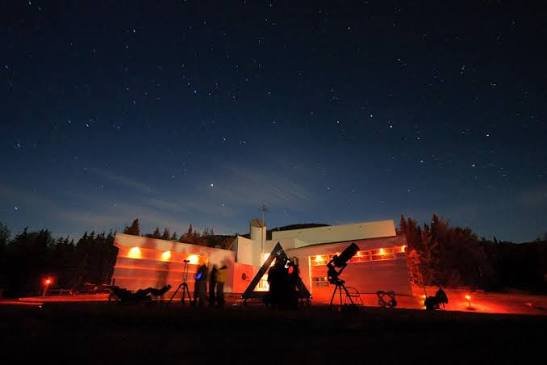
L'ASTROLab and the Mont-Mégantic observatory
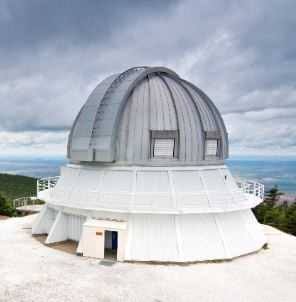
This is where we started, and it was the right call. The ASTROLab runs astronomy evenings that last about 2.5 hours — and thirty minutes more if the sky is clear, because that's when you head out to observe for real. Reservations are required and spots go quickly in high season: call 819 888-2941 or go through the SÉPAQ website. You have to check in at the Observatory sector welcome desk fifteen minutes before the starting time. The advice we were given, and that we'll pass along: dress far more warmly than the temperature down below would suggest. At over 1,000 metres, in the middle of the night, even a September evening is downright cold. Coat, tuque, gloves — we're not kidding. And if you don't have a ticket, know that the village's municipal rest area, a kilometre and a half east on Route 212, is a well-known free observation spot. It isn't the observatory, but with a sky of that quality, it's already a lot. As for us, luck wasn't on our side: the sky clouded over right before our observing session... The evening was fascinating all the same, and the playful, professional, well-pitched presentation had a lot to do with that.
The summits by car — Parc national du Mont-Mégantic
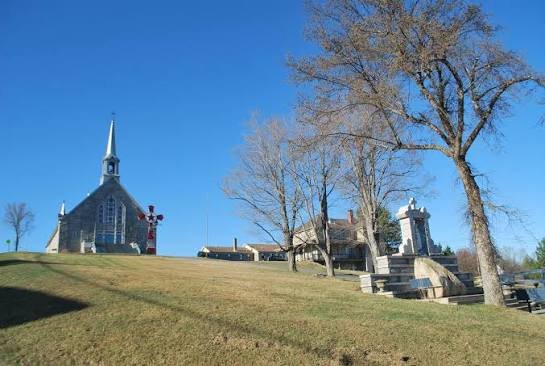
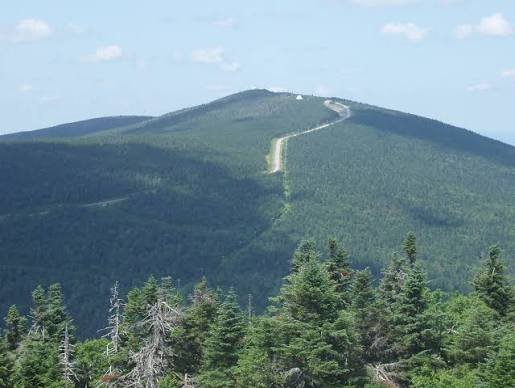
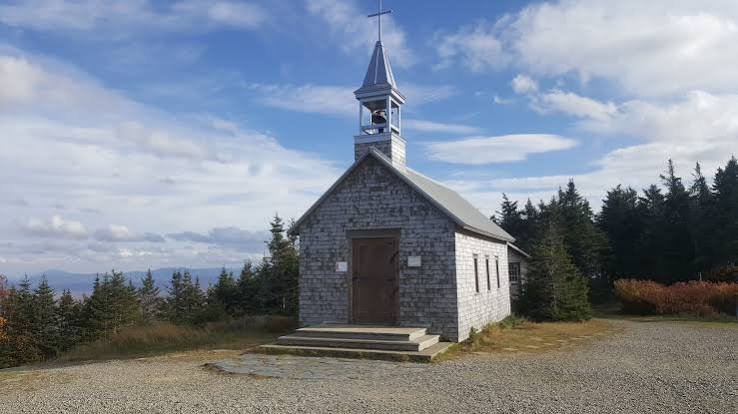
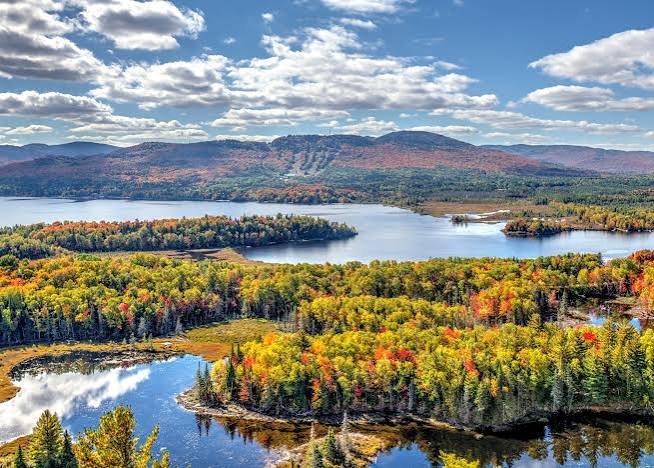
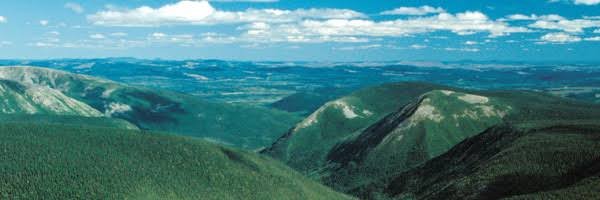
Here's the highlight of the trip, and the activity we'd recommend to anyone. A paved road climbs to the summits, open to vehicles in summer from 9 a.m. to 5 p.m. It serves two parking lots: the one at mont Saint-Joseph, at 1,065 metres, and the one at mont Mégantic, at 1,105 metres — the highest summit in Quebec reachable by car. The order we visited in, and would do exactly the same way again: Saint-Joseph first, with its little chapel and its century-old former pilgrimage site, its cross and its picnic shelter. The views open up in every direction. From there, a short stretch on foot leads to the Pic des Crépuscules, and that's where, in our opinion as in that of plenty of hikers, you'll find the finest panoramas in the sector — with far fewer people than at the main summit. You then head back down to drive up mont Mégantic and its observatory. Two warnings that matter: the road closes at 5 p.m., so you have to be up before then, even though you can come down later. And there is absolutely nothing to buy up there — bring your water and your lunch. SÉPAQ access fees are paid at the welcome centre, at 189 route du Parc, before you drive up. Bad luck again here: from the top of mont Saint-Joseph, fog as far as the eye could see. Luck came back on the other mountain, a spectacular view... Phew, we didn't lose everything!!
Herboristerie Apoteka
A lovely surprise a couple of steps from the village church, at 35 rue Principale Est. Liza, the herbalist, grows a garden of medicinal plants and takes the time to chat. You go as much for the conversation as for the products — it's the kind of address where you leave with three herbal teas and half an hour of knowledge you didn't have before. Open 10 a.m. to 4 p.m. on Saturdays. Also worth noting: the black garlic of Notre-Dame-des-Bois is a local specialty you'll find in shops around the region.
The halte Plein la Vue
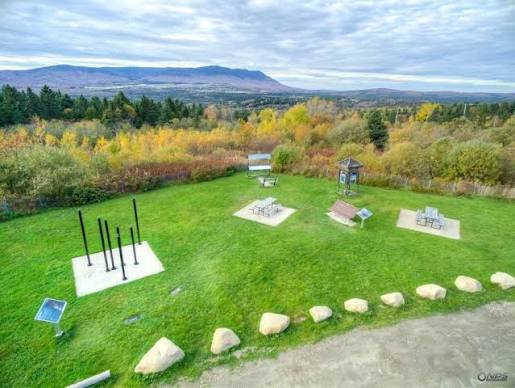
One of the official viewpoints on the Route des Sommets, with the Mont-Mégantic massif as a backdrop. Small practical trap: search for "Halte municipale de Notre-Dame-des-Bois" in your GPS, because the name "Plein la Vue" isn't always listed. It's on Route 212, about a kilometre and a half east of the village heading toward Woburn, right next to the Chalet de la Halte at number 26. It's set back and easy to miss — if you drive past without seeing anything, turn around. There are picnic tables and a dry toilet on site.
Piopolis
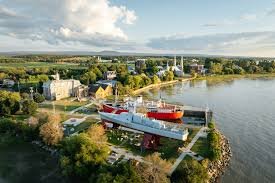
The wharf and the marina
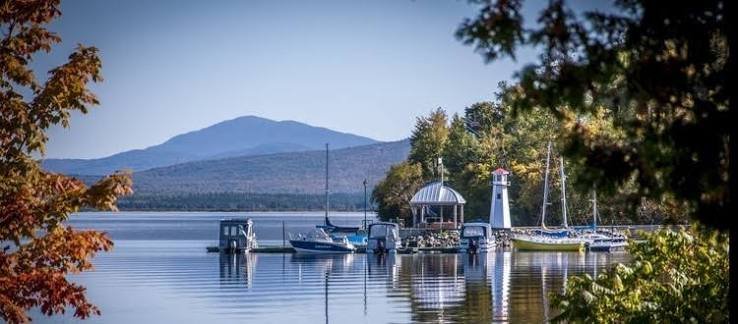
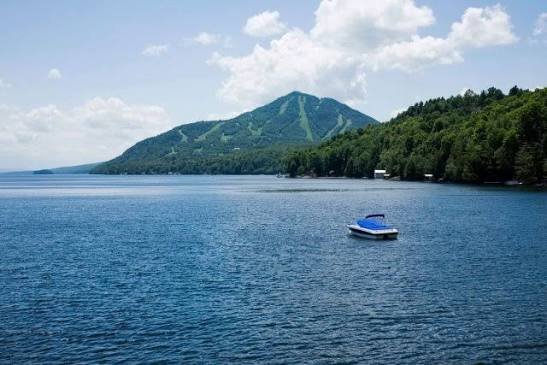
Our favourite village of the trip. The view over Lac Mégantic and the Appalachians is magnificent, there are tables to settle at, and a little lighthouse that gives the place all its charm. It's also an official viewpoint on the Route des Sommets. Plan for at least twenty minutes, more if the weather is good — you sit down and you don't get back up.
The fire tower and the Sentiers du Clocher
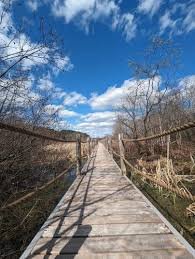
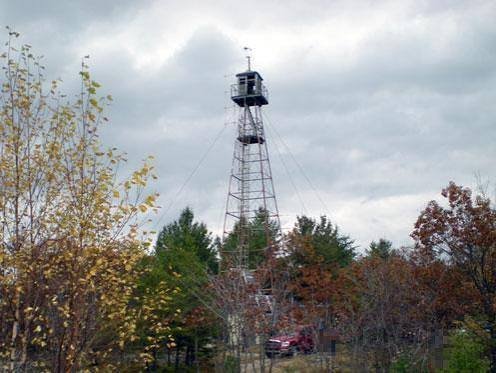
Here's the story we brought home from the weekend. Seeing that tall, narrow structure at 483 rue Principale, you inevitably picture a lookout tower for spotting forest fires. Not at all: built in 1947, the tour à feu was used to dry the hoses when the firefighters came back from a blaze. Hence its unusual architecture, which the village now showcases as a heritage building and uses as an exhibition space in summer. It's also a central landmark in the village's history: over the years, twenty-five houses literally migrated from their original locations to take root in its vicinity. The tower is one of three access points to the Sentiers du Clocher, a network of five trails totalling about 3 km. The name comes from the church bells, which ring out on every hour of the day. From the tower, you follow wooden boardwalks into the forest, with surprises along the way such as the Forêt des carillons enchantés, benches made by local artisans and texts by poets from the region. Over by the Halte des Zouaves, one section drops down toward the marsh of Piopolis bay, with interpretive panels about its ecosystem. It's all free, maintained by volunteers, and regularly decorated by the village children according to the season. You can do a simple twenty-minute stretch or string the whole thing together.
La Halte des Zouaves
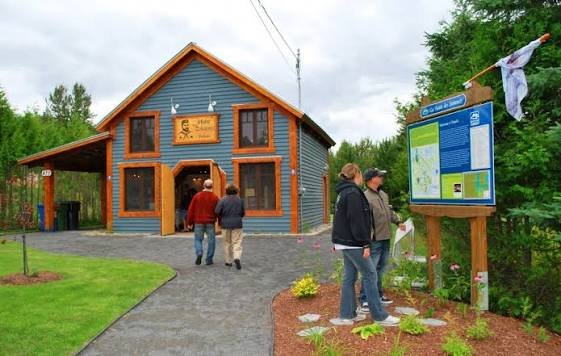
At 472 rue Principale, across from the fire tower, open every day from 10 a.m. to 5 p.m. from Saint-Jean-Baptiste Day to Labour Day. It's the tourist information office, but also an interpretive space where you discover the village's rather extraordinary history. Piopolis was founded in 1871 by fourteen papal zouaves back from their mission in Italy, who established the parish of Saint-Zénon-de-Piopolis — "the pope's town," a reference to Pius IX. The people of Piopolis love telling the rest: the nomadic houses, the crossings over the lake in winter as in summer, the steamer that linked the village to Lac-Mégantic until 1930, and the story of the hermit. For that one, you'll have to go yourself. Wifi, drinking water and public washrooms on site.
Le Magasin Général
At 454 rue Principale, open from 8 a.m. to 8 p.m. That's where we bought the famous sugar pie as seen on TV to round out our picnic for the summits. This store is packed with local products, each more appetizing than the last, but the queen of them all is still the sugar pie... divine!
Lac-Mégantic
The heritage train station
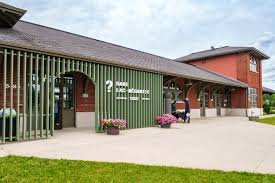
At 5480 rue de la Gare, open from 9 a.m. to 5 p.m., free admission. It's the town's history museum, and it's also the memorial to the rail tragedy of July 2013. Star-shaped silhouettes evoke the people who died, along a path lined with flowers and grasses and explanatory panels. It's a restrained, dignified place, and you can't help leaving it in silence. Plan for half an hour. One practical detail worth knowing: since 2013, the old downtown is no longer directly accessible — you have to take Route 204 again and go through the industrial park to reach Route 161 near the church.
Parc des Vétérans and Le Marcheur d'étoiles
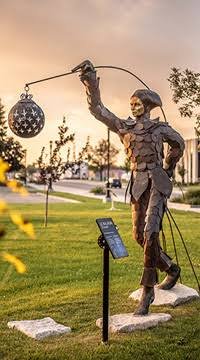
The park runs along the lake right next to the marina, at 5420 boulevard des Vétérans. It's punctuated with sculptures by local artists evoking the sky, the stars and the infinity of the universe — the dark-sky theme shows up everywhere in this region, right down to the street furniture, and it's consistent. Plenty of benches to sit on, well-maintained paths, and a panoramic view of mont Saint-Joseph and mont Mégantic. The walking circuit Le Marcheur d'étoiles, which links the sculptures, starts at 5527 rue Frontenac. Combining the heritage station with a walk to the park along the promenade easily fills an hour and a quarter.
Magog
La Fête des Vendanges
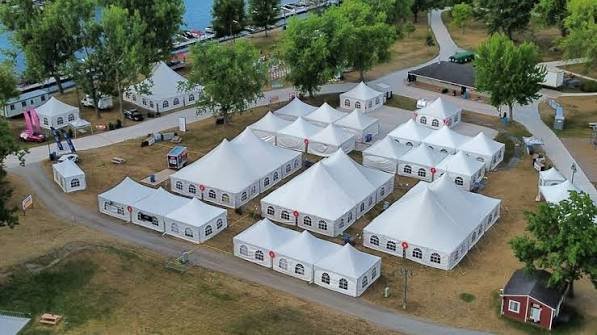
A complete change of mood. At parc de la Pointe-Merry, on the shores of Lake Memphremagog, the Fête des Vendanges brings together more than 75 producers: wineries, distilleries, cideries, microbreweries, cheesemakers and artisans of the land. It takes place in early September and runs several days. Tasting packages can be bought online or on site. After two days of mountains and quiet villages, the contrast is striking — and welcome.
A cruise on Lake Memphremagog
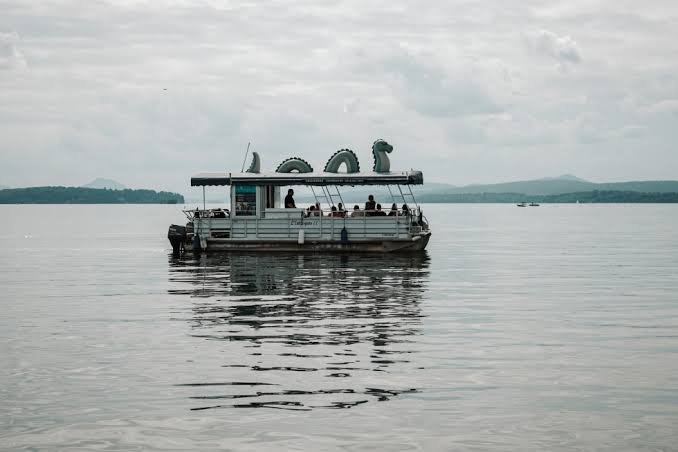
The logistical detail that makes the day easy: the cruises leave from the MacPherson wharf, within walking distance of the Fête des Vendanges. You go from one to the other on foot, without getting back in the car. Arrive twenty to thirty minutes early for boarding. Seeing the region from the water, with the mountains in the background, is the right way to wrap up a weekend spent looking at them from above.
Monday morning, before heading home
L'abbaye de Saint-Benoît-du-Lac
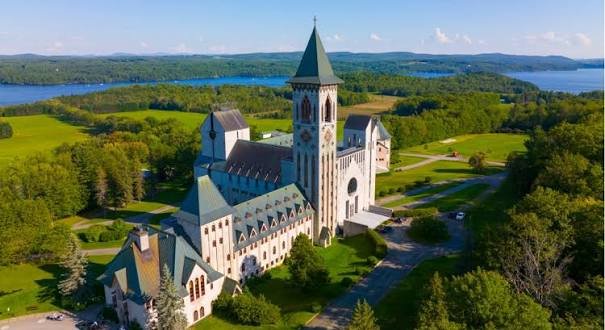
About twenty minutes from Magog, on the west shore of Lake Memphremagog, the abbey of Saint-Benoît-du-Lac is one of the flagship attractions of the Eastern Townships — and the best place we know to ease into a day. Founded in 1912 by Benedictines who came from France, it is home today to a community of about thirty monks who live by the Rule of Saint Benedict.
The building alone is worth the detour. This granite monastery with its singular architecture is the work of the monk architects Dom Paul Bellot and Claude-Marie Côté. The polychrome brick arches in the guesthouse corridor are frankly astonishing, as is the library in the same style. They lead to a church that can hold up to 400 people, where services are celebrated in Gregorian chant. The abbey church is open all year — hospitality is a Benedictine tradition — and attending an office sung by the monks is an experience apart, even for someone who isn't a believer. Silence is the rule everywhere on the site, and appropriate dress is expected.
The shop, in the basement, is the other great pleasure of the visit. The abbey cheese dairy made a single product when it started out in 1943: the blue cheese l'Ermite. The range now counts a dozen cheeses, joined by ciders, compotes, spreads and apple butters from the community's orchards — nearly 3,500 apple trees. The products carry the PAX certification, which confirms they really are made by monks.
Worth knowing before you go: the guided tours (about 30 minutes) are offered only from Saint-Jean-Baptiste Day to the Friday before Labour Day, three times a day from Monday to Saturday. Outside that window, you still have the audio guide, the church, the services and the shop — more than enough to fill a morning. Apple picking takes over on weekends from Labour Day to Thanksgiving. Address: 1, rue Principale, Saint-Benoît-du-Lac.
Bleu Lavande
Last stop before the drive home, and a total contrast with the quiet of the abbey. The Espaces Bleu Lavande are set up at 2525, rue Principale Ouest (Route 112) in Magog, very close to exit 115 off Autoroute 10. The company moved in 2021 from its original Fitch Bay site to this new location, bigger and designed to welcome visitors year-round.
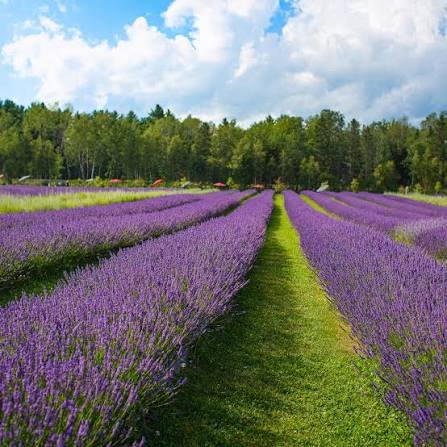
An accessible trail of about 1 km winds around the fields and flower gardens, with educational panels along the way, Adirondack chairs and picnic tables to linger at. You can also walk straight between the rows, on the grass. Three varieties take turns over the season — Munstead, Afghan lavender and lavandin. An honest word about timing: the bloom stretches from June to September, but its peak runs from mid-July to the first week of August. In September, then, you catch the end of the season — the fields are still lovely, but you're a long way from the waves of purple in the promotional photos. Plan accordingly if colour is what you're coming for.
That said, the site is much more than a field. The interpretation centre tells the story of lavender, how it's grown and what its properties are, and large windows let you see the production facilities and the soap dryer — with the artisans at work depending on the production schedule. The interactive space designed by Moment Factory drops visitors into an entirely black room where projections of colour and sound unfold. Add to that a large shop, a café and a relaxation area with massages.
One detail we liked: Bleu Lavande is the first pollinator sanctuary in Quebec, grown without pesticides, without herbicides and without chemical fertilizers, for the well-being of bees, butterflies and hummingbirds. The site is also certified accessible by Kéroul, and leashed dogs are allowed outdoors. In high season (June 20 to September 1), it's better to buy tickets online to avoid the line; after that date, you can get them on site.
What we left out
Lambton
We had it on the itinerary and gave it up for lack of time — but the village deserves better than being forgotten. Lambton is a "Cœur villageois" designated by Tourisme Cantons-de-l'Est, perched above Grand lac Saint-François, with a relaxed resort feel. Its jewel is église Saint-Vital, built from 1905 to 1907 in a Romanesque-inspired style, ranked second in a classification exercise of the churches of the Eastern Townships: admission is free, and seventeen historical frames inside make a self-guided visit possible. A heritage circuit of twelve panels and three steles starts in front of the church and the old presbytery, recounting the beginnings of settlement and the decisive role of the lake in the founding of the municipality. Also worth seeing: the Galerie d'art du presbytère, which puts on a summer exhibition of regional artists from Saint-Jean-Baptiste Day to Labour Day, the Boulangerie Lambton at 248 rue Principale for its breads and local products, and the scenic rest area at 302 rue Principale. Good to know: the public market is held on Thursdays starting at 4 p.m. Our planning mistake was wanting to combine Lambton with the southern villages on the same day — the village is distinctly farther north, on Route 263, and that adds up to nearly three hours of driving round trip. Save it for a trip through the north.
Our advice for this circuit
A few lessons from our weekend. First, the Route des Sommets is not a tight loop: its 193 km link seventeen municipalities between La Patrie and Saint-Adrien, and trying to do too much in one day gets paid for in hours behind the wheel. Concentrate on one sector. Second, the signed route isn't always the shortest: between Notre-Dame-des-Bois and Piopolis, the signs send you along Route 212 toward Woburn and then Route 263 north, which stretches things a little but lets you discover the halte Joseph-Alfred-Fontaine and the Halte des Zouaves. Your GPS will suggest something more direct — your call. Finally, watch the closing times: the summit road closes at 5 p.m., so do several village businesses, and in these small municipalities there's no plan B at 6 p.m. Buy your lunch early and drive up early. One last thing: mont Gosford, at 1,193 metres, is the highest summit in southern Quebec — but that one is reachable only on foot. We're saving it for next time.