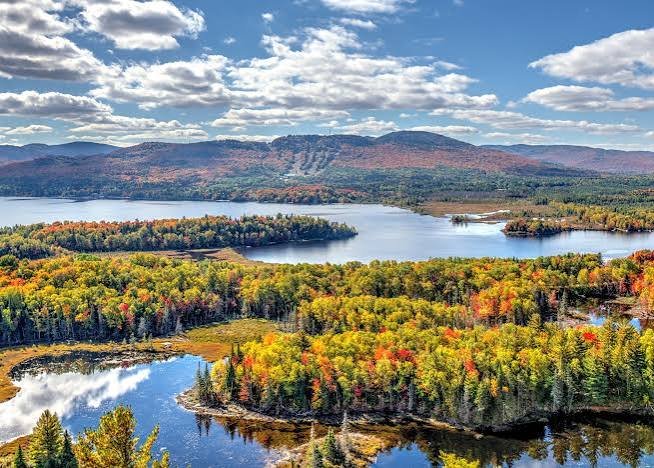
Montreal (fall)
Quebec regionMontréal
Excellent
BiodômeEspace pour la vieParc olympique

Montreal (fall)

By Marilou Harvey••5 views

Founded on May 17, 1642 under the name Ville-Marie by Paul de Chomedey de Maisonneuve and Jeanne Mance, Montreal is the second-largest city in Canada and the largest French-speaking city in the Americas. It occupies an island at the confluence of the St. Lawrence River and the Ottawa River, about 230 km upstream from Quebec City.

Its history goes back even further: in October 1535, Jacques Cartier reached the Iroquoian village of Hochelaga and named the hill that overlooks the island Mount Royal, the name from which the city's own derives. Today, Montreal blends heritage, culture and food in a cosmopolitan atmosphere, and it has been recognized as a UNESCO City of Design since 2006.

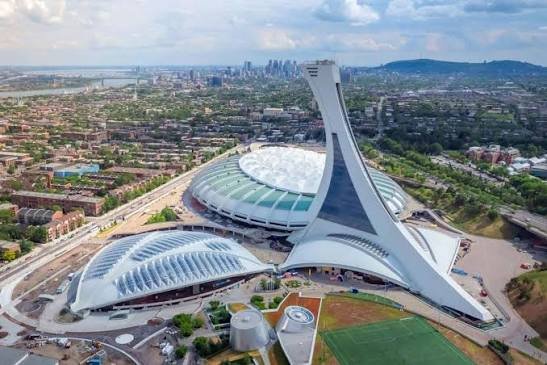
Host of Expo 67 and the 1976 Olympic Games, the metropolis has kept unique sites from those great events that you can still visit, such as the Olympic Park, home to the Biodôme, set in the Games' former velodrome.

Practical information

Duration
Un après-midi
Season
Octobre 2026
Getting around
Tesla
Accommodation
N-A

Itinerary

Chargement de la carte…
1
Québec— Where the trip starts and ends
2
Biodôme de Montréal— Five ecosystems of the Americas in the former Olympic velodrome
3
Québec— Where the trip starts and ends

The Biodôme

We were spending the weekend in Montreal to cheer on a relative who was running the marathon the next day. On Saturday, October 10, in the afternoon, we took the opportunity to visit the Montreal Biodôme, in the heart of the Olympic Park. We stayed two hours, and our favourites were the capybaras and the penguins.

Five ecosystems, from jungle to ice

The Biodôme, part of the Espace pour la vie network, is home to about 2,500 animals of nearly 150 species, along with more than 800 species of plants. The visit passes through five ecosystems of the Americas, where animals and plants live side by side, and you travel from the south to the north of the continent in just a few steps.

The tropical rainforest. This is where it begins: the air is warm and humid, the vegetation lush. You can see capybaras, our first favourite, but also golden lion tamarins, two-toed sloths, caimans, piranhas, roseate spoonbills and exotic birds. Remember to look up: the sloth hides in the treetops.

The Gulf of St. Lawrence. A large saltwater pool of 2.5 million litres reveals the river's underwater life, with hundreds of fish and invertebrates, including cod, sturgeon, skates and spiny dogfish.

The Laurentian maple forest. This typical Quebec forest changes with the seasons. You meet the Canada lynx, the beaver, the river otter and the porcupine, with a viewpoint onto the lynx habitat.

The Labrador coast. This ecosystem is devoted to the alcids, seabirds, including the Atlantic puffins, nicknamed sea parrots. Don't miss their acrobatics in the water and in the air.

The subantarctic islands. Here, the penguins steal the show, and they were our second favourite. Several species live together, including the king penguin, the gentoo penguin, the chinstrap penguin, the macaroni penguin and Moseley's rockhopper penguin, and a tunnel and an ice wall carry visitors into a polar world.

From Olympic velodrome to living museum

The building has a history of its own: it is the former velodrome of the 1976 Olympic Games. The idea of turning it into a place devoted to life came from Pierre Bourque, then director of the Montreal Botanical Garden, and the project took shape in 1992, for the city's 350th anniversary. The concept was novel at the time: recreating complete ecosystems, where animals and plants interact as in their natural environment, an idea presented as a world first. The Biodôme was given a new look in a major renovation completed in 2020.

Good to know

  • Address: 4777, avenue Pierre-De Coubertin, Montreal. Telephone: 514 868-3000. The Viau metro station, on the green line, is the closest.

  • From September 2 to April 30, the Biodôme is open Tuesday to Sunday, from 9 a.m. to 5 p.m., and closed on Monday. From May 1 to September 1, it is open every day, from 9 a.m. to 6 p.m.

  • Tickets are for a set time. They go on sale online two months ahead, and weekend and holiday slots fill up weeks in advance.

  • For two adults and one child, we paid about $70. Rates vary by age and place of residence, and combined passes let you add the Botanical Garden, the Insectarium and the Planetarium, all in the same neighbourhood.

  • The Biodôme also offers the "À table avec les manchots" (Dinner with the Penguins) activity: check its schedule before your visit.

  • Do not confuse it with the Biosphere, located on Île Sainte-Hélène: the Biodôme is in the Olympic district.

Highlights

  • •
    Le Biodôme de Montréal
  • •
    Les capybaras de la forêt tropicale
  • •
    Les manchots des îles subantarctiques
  • •
    L'ancien vélodrome des Jeux olympiques de 1976

Tips

  • 💡
    Réserver son billet à heure fixe en ligne, surtout la fin de semaine
  • 💡
    Lever les yeux dans la forêt tropicale pour repérer les paresseux
  • 💡
    Se renseigner sur l'animation « À table avec les manchots »

Frequently asked questions

Where is the Biodôme and how do you get there?
At 4777, avenue Pierre-De Coubertin, in the Olympic district, in Montreal. The closest metro station is Viau, on the green line. The Biodôme is part of Espace pour la vie, with the Botanical Garden, the Insectarium and the Planetarium, all in the same area. To reach it, call 514 868-3000.
What are the opening hours?
From September 2 to April 30, the Biodôme is open Tuesday to Sunday, from 9 a.m. to 5 p.m., and closed on Monday. From May 1 to September 1, it is open every day, from 9 a.m. to 6 p.m. Hours change on some public holidays, so check the official website before you go.
Do you need to book tickets?
Yes, tickets are for a set time. They go on sale online two months ahead, and weekend and holiday slots sell out weeks in advance. If you visit in high season, book early to avoid lining up at the entrance.
How much time should you plan for the visit?
We stayed two hours. According to guides, allow between two hours and half a day, depending on your pace and your interest in the animals. If you add other Espace pour la vie museums, plan a full day.
How much does admission cost?
For two adults and one child, we paid about $70. Rates vary by age and place of residence, and an Espace pour la vie combined pass generally costs less than separate tickets if you visit more than one museum. Check the current rates on the official website.
Which ecosystems can you visit?
Five ecosystems of the Americas, from south to north: the tropical rainforest, the Gulf of St. Lawrence, the Laurentian maple forest, the Labrador coast and the subantarctic islands. The Biodôme is home to about 2,500 animals of nearly 150 species and more than 800 species of plants.
Which animals can you see at the Biodôme?
In the tropical rainforest, capybaras, golden lion tamarins, sloths, caimans, piranhas and exotic birds. In the Laurentian maple forest, the Canada lynx, the beaver, the river otter and the porcupine. In the Gulf of St. Lawrence, hundreds of fish and invertebrates. On the Labrador coast, the Atlantic puffins. On the subantarctic islands, several species of penguins. The capybaras and the penguins were our favourites.
Why is the Biodôme housed in a velodrome?
Because the building was originally the velodrome of the 1976 Olympic Games. Pierre Bourque, then director of the Montreal Botanical Garden, had the idea of turning it into a place devoted to life, and the project took shape in 1992, for the city's 350th anniversary.
Is the Biodôme suitable for families?
Yes, it is one of the favourite places for families in Montreal, with an average rating of 4.5 out of 5 from more than 23,000 Google reviews. We went as three, with a child, and the route is on foot, indoors, in any weather.
Can you combine the Biodôme with other visits?
Yes. An Espace pour la vie combined pass lets you add the Botanical Garden, the Insectarium and the Planetarium, which are in the same neighbourhood. The Espace pour la vie passport also includes the Biosphere, which is on Île Sainte-Hélène and should not be confused with the Biodôme. Check the current rates on the official website.

Comments

Loading comments…

Around this place

35 m from Quebec City · 233 km from Montreal

See all our places on the map →